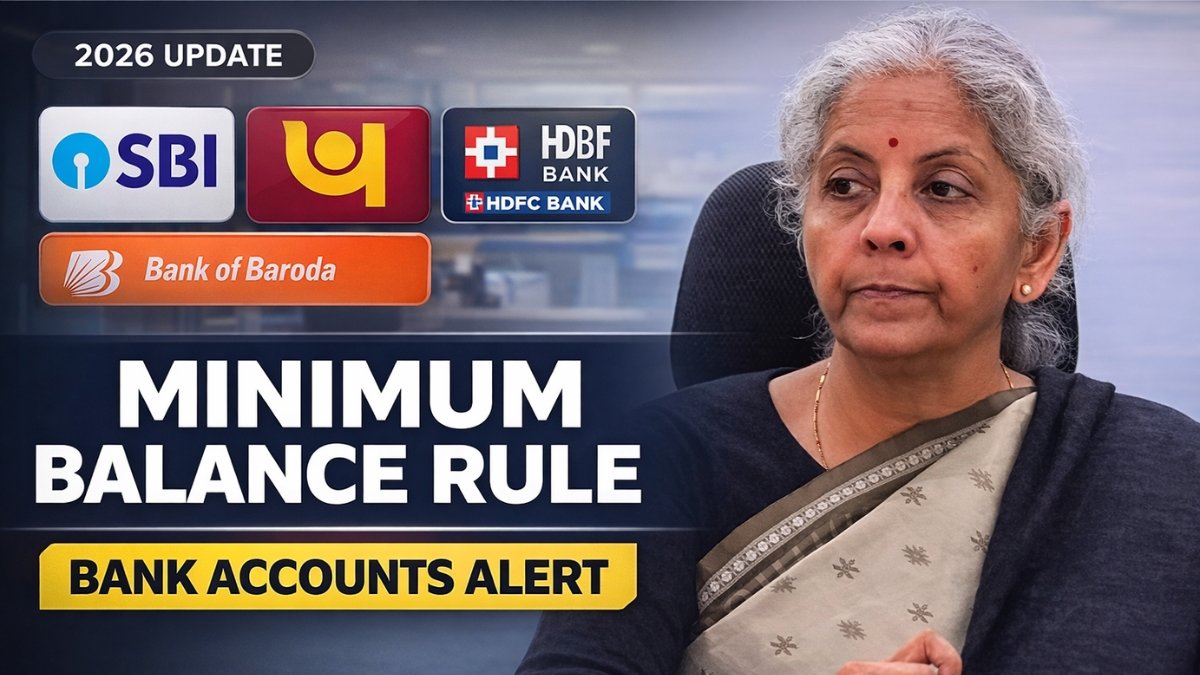
2026 Bank Minimum Balance: Account holders of major Indian banks like State Bank of India (SBI), Punjab National Bank (PNB), and Bank of Baroda (BOB) are facing important updates for 2026 minimum balance rules.
These changes affect how much money customers must maintain in their savings accounts each month to avoid penalty charges. With banks revising policies to balance service costs and operational norms, it’s essential for every customer to understand what the new rules mean and how they might impact monthly banking.
What Is Minimum Balance Rule
A minimum balance rule is a requirement from banks asking customers to keep a certain amount in their savings account regularly. If the balance falls below this level during the month, the bank often charges a penalty. These rules help banks manage operations and ensure customers use their accounts responsibly. In 2026, many banks are updating these thresholds to match changing economic and operational standards.
SBI New Minimum Balance Norms
State Bank of India (SBI) India’s largest public sector bank has revised its minimum balance requirements across various cities and account types. In urban areas, the required average monthly balance may be higher compared to semi-urban or rural branches.
SBI customers should check specific city categories in their passbook or banking app. If the balance falls below the new limit, penalty charges can be applied, which makes tracking your balance more important than ever.
PNB Updated Balance Requirements
Punjab National Bank (PNB) has also updated its savings account rules for 2026. The new minimum balance figures differ depending on whether your account is a regular savings one or a premium segment.
PNB customers are advised to review the latest communication from the bank, such as SMS alerts, email notifications, or updates in the mobile banking app. Not maintaining the required balance can result in penalties that get deducted automatically.
Bank of Baroda’s Rule Changes
Bank of Baroda (BOB) has issued new guidelines for minimum monthly balance across different branches. Much like other banks, BOB has grouped balance thresholds into categories based on urban, semi-urban, and rural designations.
This means your city or town determines the exact amount you should maintain. If you miss the required balance, a penalty fee could be charged on a monthly basis.
How Penalty Charges Work
When you fail to maintain the minimum balance, the bank generally deducts a penalty charge from your account. The charge varies by bank and branch category. Some banks may charge extra fees for multiple violations within a single month, while others may levy a flat monthly penalty. Always read the latest bank notice or visit your branch to understand how much and how often these charges apply.
How To Avoid Penalty Charges
To avoid penalty charges, account holders should:
• Regularly monitor their account balance via mobile or net banking
• Set alerts for low balance notifications
• Maintain a cushion above the required minimum
• Consider converting to a zero-balance account if eligible (like students or certain salary accounts)
Keeping a close eye on monthly balances can help you escape unnecessary fees and manage your finances better.
Who Is Exempt From Minimum Balance
Some categories of account holders are usually exempt from maintaining minimum balance:
• Salary accounts where employers deposit salaries
• Basic savings accounts under government social schemes
• Senior citizens’ accounts (in some banks)
• Accounts opened under special government initiatives
However, exemptions vary by bank, so it’s best to confirm with your bank if your account qualifies.
Final Verdict: 2026 Bank Minimum Balance
The 2026 minimum balance update from SBI, PNB, and Bank of Baroda means many account holders may need to rethink how they maintain their savings accounts. With updated thresholds and possible penalties for non-maintenance, staying informed is key. Regularly checking your account balance, understanding your specific bank’s requirements, and opting for notifications can help you avoid extra charges and manage your finances more effectively in 2026.